Technology Policy - Telangana
Strengthening Telangana's Gig and Platform Workers Rules: Seven Recommendations
Translation is unavailable right now. This article is still readable in English.
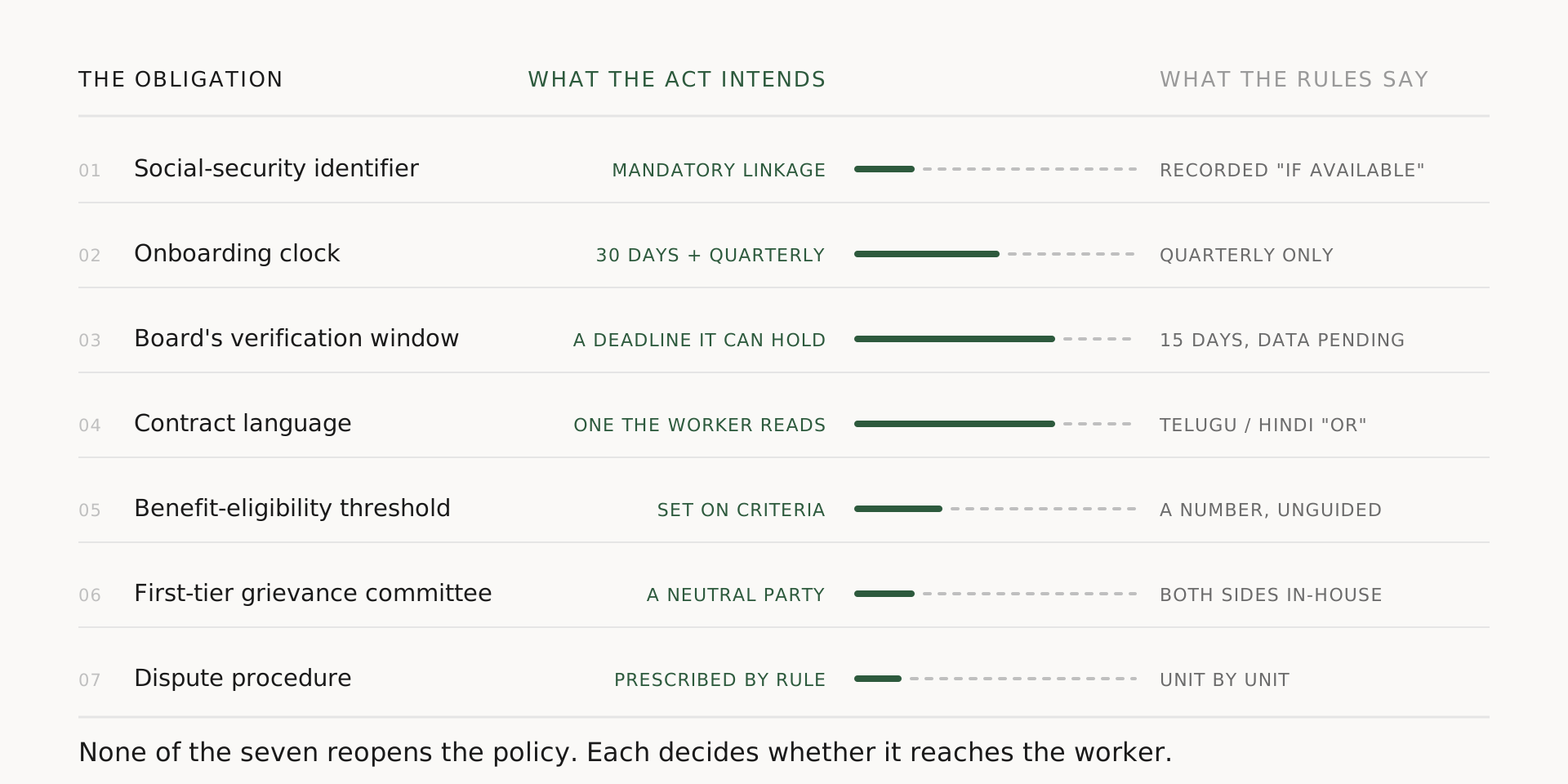
Telangana is among the first Indian states to build a dedicated welfare architecture for the people who drive its food, delivery, and ride-hailing economy. The parent legislation, the Telangana Platform Based Gig Workers (Registration, Social Security and Welfare) Act, 2026, in force since 2 June 2026, sets out the ambition: register every platform worker, give them a portable identity, fund their social security, and create a fair way to resolve disputes. The Draft Rules are where that ambition either becomes operational or gets lost in ambiguity.
We reviewed the Draft Rules closely and found that the framework is sound, but several provisions leave room for confusion, weak enforcement, or outcomes the Act never intended. Below are seven areas where small, precise amendments would make the rules clearer, fairer, and better aligned with both the parent Act and India’s national Code on Social Security, 2020. None of these change the policy’s direction; they protect it.
1. Make Social-Security Identifiers Mandatory, Not Optional
When an aggregator hands over a worker’s details to the Board, the worker’s Universal Account Number (UAN) — the identifier that ties them into the national social-security system — is currently treated as optional, recorded only “if available.” The Code on Social Security already mandates this linkage. Leaving it optional lets the most important field for a worker’s long-term benefits go unfilled.
We recommend that the UAN be captured for every worker, whether generated through the e-Shram portal or another platform, rather than being collected only when convenient.
A welfare identity that is optional is no identity at all.
2. Clear Up the Onboarding Timeline
The Act tells platforms two things: register newly onboarded workers within 30 days, and send the Board a quarterly headcount of additions and separations. The Draft Rules, however, mention only the quarterly update and stay silent on the 30-day registration window. That silence creates a genuine compliance gap: platforms cannot tell whether the 30-day obligation still applies.
We recommend the rules state both obligations explicitly — the 30-day window to register individual workers, and the quarterly reporting on overall numbers. Spelling out both removes any excuse for delay.
3. Give the Board Enough Time to Verify
A worker who self-registers expects the Board to verify their details and issue a Unique ID (UID) quickly; the draft sets a 15-day deadline. But the same rules give platforms a separate window to update worker details first. In practice, the Board may not even have complete information within 15 days, setting it up to miss its own deadline.
We recommend extending the Board’s verification-and-issuance window to 30 days. This is not about slowing things down for workers; it is about setting a timeline the Board can actually meet, so the deadline means something.
4. Contracts Workers Can Actually Read
The Act is clear that a worker’s contract must be in a language they easily understand. The Draft Rules, though, say the contract should be in Telugu, Hindi, or any other scheduled language as the worker prefers. That single word, “or,” lets a platform satisfy the rule by publishing in just one language — plausibly Hindi alone — even where most workers read Telugu.
We recommend replacing “or” with “and”: contracts should be available in Telugu, Hindi, and English, plus any additional language the worker needs.
A contract a worker cannot read is not a fair contract.
5. Define Who Qualifies for Benefits
The rules let the Board set a minimum number of transactions or gigs a worker must complete in a quarter to qualify for social-security benefits, but offer no criteria for how that threshold should be set. Without guidance, a single number risks ignoring how differently platform work behaves across sectors and seasons.
We recommend the rules give the Board a guiding framework for setting thresholds, including:
- Sector-specific variations in platform work
- Registration or work across multiple platforms
- Variations in how platforms make work available and allocate it
- The nature and continuity of the work performed
A worker who delivers groceries through monsoon-disrupted months should not be measured by the same yardstick as one in a steady, year-round gig.
6. An Independent Voice in Dispute Resolution
The Internal Dispute Resolution Committee (IDRC) — the first place a worker takes a grievance — is, as drafted, composed entirely of platform management and gig workers from that same platform. With both sides drawn from inside the relationship, there is no neutral party to ensure fairness.
Platform management and gig workers from that same platform. Every member is a party to the relationship the committee is asked to adjudicate.
The same two sides, plus at least one member unaffiliated with the platform, the aggregator, or the workers, bringing expertise in dispute redressal or labour law.
We recommend the Board require at least one independent member on every IDRC. Neutrality is what makes a grievance mechanism credible.
7. Consistent, Transparent Dispute Procedures
The Act explicitly anticipates that the rules will prescribe not just who sits on an IDRC but how it works. Yet the draft lets large platforms set up multiple IDRC units with no common procedure, meaning two workers with nearly identical complaints could be treated very differently depending on which unit hears them.
We recommend minimum documentation standards across all IDRCs: standard complaint formats, standard templates for communicating outcomes, and public-facing records of both the status and the resolution of disputes. Consistency makes outcomes predictable, and a transparent record makes the appeal process meaningful.
Why These Fixes Matter
None of these seven recommendations reopens a policy debate. They are the operational details that decide whether a well-intentioned welfare framework actually reaches the worker on the street, or stalls in ambiguity, uneven enforcement, and unreadable contracts.
Telangana has taken a genuinely progressive step in legislating for gig and platform workers. Sharpening these rules before they take effect is how the state ensures that the protections on paper become protections in practice. We urge the Board and the government to incorporate these amendments as the Draft Rules are finalised.